

Over the next two decades, more wealth will change hands than at any time in history. In the United States alone, Cerulli Associates projects $124 trillion will transfer through 2048, with roughly $105 trillion going directly to heirs.
Every attorney, financial advisor and trust officer in the country has a plan for that money. Almost nobody has a plan for the reason the money exists.
Cliff Thomas, MNPA, CAP®, Director of Development at The Community Foundation for Northeast Florida, has written one of the clearest pieces I have read on this problem, and he has generously allowed us to share it. His diagnosis is simple:
“We understand the consequences of transferring assets but have not yet placed the same emphasis on transferring the values that shape a family’s decisions.”
Read that again if you are a gift officer. Because the conversation Cliff is describing is the one you are not having.
Every attorney, financial advisor and trust officer in the country has a plan for that money. Almost nobody has a plan for the reason the money exists.
The Tools Handle the Money. Nobody Handles the Meaning.
Wills, trusts, beneficiary designations, charitable vehicles and family offices are precise instruments. They protect beneficiaries and carry out charitable intent. But as Cliff puts it:
“They primarily answer who receives what, when, and under what conditions. They do not answer why the wealth matters or what responsibilities come with it.”
The risk is predictable. Third and fourth generations who never faced the hardships of the wealth creator can inherit the assets without the understanding behind them. When that happens, Cliff warns, heirs may manage philanthropy “in ways that are neither thoughtful nor disciplined.” Their advisors focus on technicalities. And the family never has the hard conversation.
Cliff is fair about why: “This is not because they are indifferent, but because they don’t know how.”
Most gift officers walk into a donor’s home, talk about what goes where, and leave. That is the same mistake, made by people who should know better.
Three Transfers That Matter More Than the Assets
Cliff’s framework gives families, and the professionals who serve them, three connected transfer points: meaning, rules and contribution.
01
Conviction TransferStart With the Family Story
“The first task is not to establish a list of rules to pass on to young givers; it is to understand the family narrative those rules are meant to protect.”
He asks both generations to reflect, before they meet, on a handful of questions. Where did the family’s resources come from? What sacrifices or opportunities shaped them? What mistakes impacted the family? What are its pride points? What responsibility do family members believe they have for the greater good?
The answers become a one-page snapshot, and that page becomes the seed of a family mission statement. Cliff is explicit that advisors can facilitate this, but should take care not to write the story for the family. When the generations disagree, he asks each one to name a cause reflected in the family story and explain why it matters. The heirs are not there to inherit their parents’ causes. They are there to carry the family’s convictions into causes of their own.
He recommends reviewing the statement every year and again after any major event: a death, a marriage, a business sale. Some families read it aloud at every family meeting.
02
Control TransferGive Everyone a Job
Values that are never practiced become slogans. So Cliff assigns age-appropriate roles. Children research local needs. Teenagers make site visits, compare organizations and prepare questions for nonprofit leaders. Young adults manage giving budgets. Seasoned members chair the process. Roles rotate, so power never hardens in one place.
When politics divides the family, he suggests shared, non-partisan causes, or a combined giving pool with separate budgets for individual grantmaking. That second structure is, in practice, what a family donor-advised fund does very well.
“The goal is not conformity but rather a process that allows people to remain connected while also holding different views.”
03
Engagement TransferTeach Them to Check Before They Give
“Generosity explains why we give. Stewardship helps us determine how to give wisely.”
Choosing a cause is not the end of the work. Cliff wants every family member to learn to evaluate the organizations they support across five areas: governance, financial structures, insider benefits and conflicts, fundraising, and consistency of mission and practice.
He also warns against overdoing it. Small organizations doing vital work often lack polished reports, and demanding them diverts money from the mission. Due diligence, he writes, “should not be a test on who can create the glossiest case statements.”
Cliff’s Checklist Is a Form 990
Here is what Cliff doesn’t say outright, and what every fundraiser should notice. For larger charities, his five areas map closely onto a public document they already file with the IRS every year. If you have never studied one, start with How to Read a Form 990.
- Governance is Part VI: board independence, conflict-of-interest policies, whistleblower policies.
- Financial structures are Parts VIII through X: revenue, expenses and the balance sheet.
- Insider benefits and conflicts show up in Part VII compensation and in Schedule L, transactions with interested persons. Our guide to 990 Schedules Explained walks through both.
- Fundraising costs appear in Part IX, column D. Schedule G adds detail on professional fundraisers and events when they apply.
- Mission consistency starts with Part III: what the organization reports it accomplished. That is the claim. Your conversation and site visit are the check.
Know the warning signs before you go in. Red Flags and What They Mean covers the ones that matter most, especially in insider transactions.
The 990 is where due diligence starts, not where it ends. It costs the charity nothing extra, it is public, and it tells you which questions to ask in the conversations and visits Cliff recommends. Smaller charities file the shorter 990-EZ or the postcard 990-N (see the four types of 990). To look up any charity a family is considering, use 990 Scout, free. The full library lives in the Philanthropy.org Form 990 Resource Center.
And here is the uncomfortable corollary: if a donor family can read your 990, so can the next generation. Stuart P. Sullivan, Chief Philanthropy Officer at Shriners Children’s, sees it firsthand:
Donors today have more information at their fingertips about our organizations than ever before and are asking informed and challenging questions as a result. I routinely am asked by donors to justify our investment in fundraising and the return on that investment with the donor citing numbers directly from our 990 or ratings such as Charity Navigator. Their financial and legal advisors are asking even more difficult questions. Their level of confidence in making the ultimate gift commitment to our organizations depends on how we respond to these challenging questions.
Stuart P. Sullivan, Chief Philanthropy Officer, Shriners Children's
Make sure your 990 tells the story you want told. Our series The Public Record shows how.
Where the Values Get Written Down
A mission statement explains a family’s convictions. A charitable bequest puts those convictions into action beyond the donor’s lifetime. But a bequest directs money; it does not explain motive. That is why the conversation has to happen while the donor is alive, so the heirs understand the gift when it arrives. For families who want those convictions to work in perpetuity, a named endowment carries the story forward long after the people who wrote it are gone. Run the numbers with the free Endowment Calculator.
What This Means for Your Career
The transactional gift officer asks about the will, records the expectancy, and waits. When the donor dies, he finds out what happened from the estate attorney… if he finds out at all.
The gift officer who brings the values conversation into the room gets invited to the family meeting. She meets the children. She asks the questions that help the family tell its own story. When the wealth passes, she is not a stranger to the heirs; she is the person who helped them understand why their parents gave.
Those heirs will be donors for the next forty years. The trillions are moving whether you are in the room or not. The officers who learn to transfer values, not just process assets, will be the ones the next generation calls. And their résumés will show it.
Transfer More Than Assets
Start with one question at your next donor visit: “What do you want your children to understand about why you give?”
Then listen. Cliff closes with a line every planned giving professional should keep in front of them:
“I believe families that treat value transfer as seriously as asset transfer are more likely to build a legacy that survives.”
Your donors already have attorneys for the money. Be the one who helps them pass on the meaning.
ABOUT THE CONTRIBUTOR
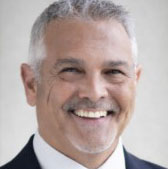
Cliff Thomas, MNPA, CAP®
Cliff is Director of Development at The Community Foundation for Northeast Florida. Excerpts from his essay “The Harder Inheritance: Wealth vs Values” appear with his permission. Connect on LinkedIn.