ARCHIVES

Philanthropy Today

Philanthropy is changing—fast. Policy shifts, economic pressure, evolving donor expectations, and new technologies are reshaping how nonprofits operate. Philanthropy Today delivers clear analysis, relevant trends, and straight talk to help you stay ahead. No fluff. No panic. Just what’s happening now—and what it means for your mission.

Browse by Topic
Wall Street Journal Clipping: Many Colleges Fail in Teaching How to Think

Many Colleges Fail in Teaching How to Think — And Donors Are Catching On

In 2017, the Wall Street Journal warned: “Many Colleges Fail in Teaching How to Think.” Eight years later, was it prophecy? Alumni giving is down. Public confidence has collapsed. Colleges are closing almost weekly. Donors now ask: Am I funding thinkers—or just diplomas? Real education, or expensive amenities? If students leave no better at reasoning than when they arrived, why should anyone keep writing checks? The warning was clear. The collapse was inevitable.


Read More »
Depiction of Harvard University

Would You Donate to Harvard?

Harvard: citadel of brilliance or fortress of privilege? For decades, liberals slammed it as an elitist gatekeeper—legacy admissions, donor perks, and wealth dressed up as meritocracy. Now, conservatives aim to gut its funding, branding it a woke factory. Different flags, same battlefield. Reform or revenge—the motives have shifted, but Harvard remains rich, elite, and untouchable. The question isn’t whether it deserves criticism. It’s whether you’d bankroll an empire of inherited advantage… or gamble on the promise of change.

Read More »
Concerned fundraising professional reading tax reform updates, reflecting nonprofit sector’s uncertainty after the One Big Beautiful Bill Act passed.

New Law, Same Panic

On July 4th, the One Big Beautiful Bill Act (OBBB) became law—prompting predictable panic in the nonprofit sector. Critics decried lower top-tier deductions and a new AGI floor. But pause. OBBB didn’t undercut charitable giving—it strengthened it. By making key reforms permanent, it created clarity: a 60% AGI limit for cash gifts, a new deduction for non-itemizers, and preserved estate exemptions. Just as important, it solidified long-term economic stability—an essential foundation for future generosity. This wasn’t a loss; it was a safeguard. The smart fundraiser sees the opportunity, not the noise. It’s time to stop reacting—and start leading.

Read More »
A cartoon image of three yellow figures standing on three green arrows pointing to a bullseye target. It illustrates the concept that financial advisors should form relationships with nonprofits.

Financial Advisors Should Befriend Nonprofits — Before Their Clients Do

As $84 trillion transfers from Baby Boomers to younger generations, financial advisors risk losing both clients and assets to charitable giving—unless they act strategically. When donors establish charitable vehicles without advisor involvement, that wealth often moves permanently outside the advisor’s purview to competitors like Fidelity Charitable or nonprofit-referred planners. The solution? Build intentional relationships with nonprofits before clients do. This triangular alliance—advisor + donor + nonprofit—creates stronger outcomes for everyone while protecting assets under management and positioning advisors as indispensable partners in legacy planning conversations that matter most.

Read More »
Financial advisor reading messages on smartphone disappointed at the news. Why should advisors embrace philanthropy? Because the Great Wealth Transfer is already happening.

Why Advisors Are About to Lose Their Best Clients

Advisors: You’re About to Get Fired: An $84 trillion wealth transfer is coming—and your name’s not on the guest list. The moment your client dies, retires, or checks into assisted living, their kids will hand everything to a friend from college or church. Unless you’ve built credibility with the next generation—and brought philanthropy into the conversation—you’re toast. Legacy is the new currency. Master it, or watch your book bleed out while someone else becomes the family’s trusted advisor.

Read More »
African American volunteers working at a nonprofit

Legacies of Persistence: Reclaiming the Philanthropic Power of Black Nonprofits

This is an urgent summons to funders, sector leaders, and scholars: The true story of American philanthropy remains buried, its most transformative chapters deliberately omitted. If we dare to understand the real legacy of American generosity, we must confront the systematic silencing of those whose radical acts of collective care built communities, funded freedom movements, and sustained hope against impossible odds. The reckoning is overdue.

Read More »

You’re Ignoring the 10-Year-Old Who Will Fund Your Mission in 15 Years

Today’s 10-year-olds will inherit and create more wealth than any generation before them—yet we wait until age 40 to talk to them about philanthropy. That’s a strategic mistake. Habits form early, and if we want generosity to be part of their identity, we must start now. Philanthropy isn’t a transaction—it’s a belief system. Waiting means forfeiting influence over the values of those who will soon control trillions. The future of giving starts younger than you think.

Read More »
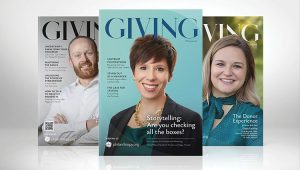
Blog Banner - GIVING Magazine Issues

GIVING Magazine Names Patrick O’Donnell as Executive Editor

We’re thrilled to share that Patrick O’Donnell will be taking the helm of GIVING magazine as executive editor, and will also serve as editorial director for GIVING’s sister site, Philanthropy.org. Patrick is a writer, editor and author who brings more than 30 years of experience to the table. He’s been working with the PlannedGiving.com brand for almost a decade, specializing in storytelling, attention-grabbing appeal letters, and planned giving content.

Read More »
Finger poised over a glowing red panic button—symbolizing the urgent, high-stakes decisions nonprofits face in uncertain times.

Have We Been Here Before?

Laura MacDonald discusses how nonprofits face recurring disruptions but historically remain resilient. Despite challenges like COVID-19, tax changes, recessions, and current political anxiety, charitable giving has averaged 6% growth since 1967. She advises organizations to project resilience, sustain relationships, respond strategically rather than react, and adopt donor-centric approaches. Rather than making preemptive decisions for donors, nonprofits should stay the course and continue their missions, as anxiety is the enemy of philanthropy but donor confidence typically rebounds within 6-18 months after disruptions.

Read More »
>