Author: Viken Mikaelian

Depiction of Harvard University

Would You Donate to Harvard?

Harvard: citadel of brilliance or fortress of privilege? For decades, liberals slammed it as an elitist gatekeeper—legacy admissions, donor perks, and wealth dressed up as meritocracy. Now, conservatives aim to gut its funding, branding it a woke factory. Different flags, same battlefield. Reform or revenge—the motives have shifted, but Harvard remains rich, elite, and untouchable. The question isn’t whether it deserves criticism. It’s whether you’d bankroll an empire of inherited advantage… or gamble on the promise of change.


Read More »
Concerned fundraising professional reading tax reform updates, reflecting nonprofit sector’s uncertainty after the One Big Beautiful Bill Act passed.

New Law, Same Panic

On July 4th, the One Big Beautiful Bill Act (OBBB) became law—prompting predictable panic in the nonprofit sector. Critics decried lower top-tier deductions and a new AGI floor. But pause. OBBB didn’t undercut charitable giving—it strengthened it. By making key reforms permanent, it created clarity: a 60% AGI limit for cash gifts, a new deduction for non-itemizers, and preserved estate exemptions. Just as important, it solidified long-term economic stability—an essential foundation for future generosity. This wasn’t a loss; it was a safeguard. The smart fundraiser sees the opportunity, not the noise. It’s time to stop reacting—and start leading.

Read More »
Illustration of a crouching nonprofit leader under a lightning-cracking storm cloud, symbolizing organizational fragility and looming Black Swan crises.

Built to Break: How Nonprofit Culture Creates Its Own Crises

Many nonprofits operate like unsuspecting turkeys, assuming past stability guarantees future safety. Built on feel-good events, crisis-driven appeals and compliance-focused boards, they remain fragile when unpredictable Black Swans—economic shocks, political upheavals, shifting donor sentiment—strike. Reactivity replaces strategy, visibility trumps resilience, and metrics reward vulnerability over strength. True antifragility requires cultivating long-term donor relationships, endowments, dissent-welcome hiring, mission-anchored vision, and durable structures that absorb disruption and emerge stronger, turning inevitable crises into growth catalysts for mission-driven impact ahead.

Read More »

Tata Trusts

Country: Denmark

This another example of an excerpt. About 50 to 6 words. A word example blurb. Mani words e pluribut mini. A semi homa bobule horation minga boma. This another example of an excerpt. About 50 to 6 words. A word example blurb. Mani words e pluribut mini. A semi homa bobule horation minga boma.

Read More »

Novo Nordisk Foundation

Country: Blah Land

50 to 65 words. Blah blah. This another example of an excerpt. About 50 to 65 words. A word example blurb. Mani words e pluribut mini. A semi homa bobule horation minga boma.

Read More »
A cartoon image of three yellow figures standing on three green arrows pointing to a bullseye target. It illustrates the concept that financial advisors should form relationships with nonprofits.

Financial Advisors Should Befriend Nonprofits — Before Their Clients Do

As $84 trillion transfers from Baby Boomers to younger generations, financial advisors risk losing both clients and assets to charitable giving—unless they act strategically. When donors establish charitable vehicles without advisor involvement, that wealth often moves permanently outside the advisor’s purview to competitors like Fidelity Charitable or nonprofit-referred planners. The solution? Build intentional relationships with nonprofits before clients do. This triangular alliance—advisor + donor + nonprofit—creates stronger outcomes for everyone while protecting assets under management and positioning advisors as indispensable partners in legacy planning conversations that matter most.

Read More »
Leadership Quiz Banner

QUIZ: Do You Know Enough to Lead?

Most fundraisers assume they deserve a seat at the table; this tool reveals if you truly do. It tests your grasp of financial metrics, donor intelligence, and strategic priorities—core knowledge that separates respected leaders from the overlooked. You’ll identify gaps in your organizational awareness and uncover the skills that position you as a trusted, data-savvy partner. It’s more than a professional check-in—it’s a reality check on your readiness to lead.

Read More »
Ethical dilemma illustration with angel and devil on shoulders representing tainted money decisions in philanthropy. It illustrates a blog post about taking controversial donations.

Take the Money. Save the Mission.

Who is our enemy? The current administration or us? This explosive essay argues nonprofits are committing suicide through moral performance theater. While organizations obsess over donor ‘purity tests’ and Twitter tantrums, missions collapse and staff get laid off. The brutal truth: accepting ‘tainted’ money isn’t unethical—letting your cause die because you’re afraid of headlines is. Universities and government take questionable money daily. Stop letting reputation managers kill your mission. Take the controversial donation, keep the lights on, and help people instead of virtue signaling your way to bankruptcy

Read More »

You’re Ignoring the 10-Year-Old Who Will Fund Your Mission in 15 Years

Today’s 10-year-olds will inherit and create more wealth than any generation before them—yet we wait until age 40 to talk to them about philanthropy. That’s a strategic mistake. Habits form early, and if we want generosity to be part of their identity, we must start now. Philanthropy isn’t a transaction—it’s a belief system. Waiting means forfeiting influence over the values of those who will soon control trillions. The future of giving starts younger than you think.

Read More »
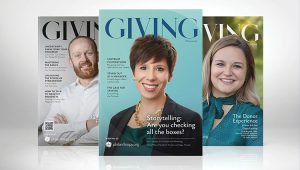
Blog Banner - GIVING Magazine Issues

GIVING Magazine Names Patrick O’Donnell as Executive Editor

We’re thrilled to share that Patrick O’Donnell will be taking the helm of GIVING magazine as executive editor, and will also serve as editorial director for GIVING’s sister site, philanthropy.org. Patrick is a writer, editor and author who brings more than 30 years of experience to the table. He’s been working with the PlannedGiving.com brand for almost a decade, specializing in storytelling, attention-grabbing appeal letters, and planned giving content.

Read More »
>