Why asset-based giving belongs in small nonprofits, too
In 2025, 85% of every dollar our all-volunteer foundation received came from assets, not cash. We are a community of 400 households with no staff and no gift officer.
Most people assume asset-based giving is for big organizations. It sounds like something that needs a planned giving officer, a development director, and a relationship with three wealth advisors. Small nonprofits are supposed to stick to the donate button, the spring appeal, and the gala.
I think that assumption is wrong, and I think it is expensive.
Here is what happened at ours.
What we found
GOSUMEC Foundation USA funds scholarships for medical students at Seth G.S. Medical College and KEM Hospital in Mumbai. We have no staff and no overhead. Board members cover every operating cost personally, so every donated dollar goes to scholarships or the endowment.
Our community is about 400 households. Of those, 116 have given.
In 2025, our donations broke down like this:
| Vehicle | Share of 2025 donations |
|---|---|
| IRA charitable distributions (QCDs) | 47% |
| Donor-advised fund grants | 19% |
| Appreciated stock | 13% |
| Family foundation grants | 6% |
| Asset-based total | 85% |
| Cash, personal checks, cards, ACH, digital wallets | 15% |
Fifty-eight of our 116 donor households — exactly half — gave through assets that year. The other 58 gave the ordinary way: cash, a personal check, a card, or a recurring monthly gift.
Half the households. Eighty-five percent of the money.
Cash is the wrong pocket
The reason is simple. Very little of anyone’s wealth sits in a checking account.
Household wealth sits in retirement accounts, brokerage accounts, real estate, and donor-advised funds. Estimates vary, but they all point the same way: roughly 90% or more of American household wealth is held in something other than cash, while the large majority of charitable gifts are made in cash.
If you accept only cash, you are not asking donors for less. You are asking them to give from the smallest pocket they own.
There is also a psychological difference. An annual appeal asks someone to give from this year’s income — the same money that pays the mortgage and the tuition. A gift of stock or an IRA distribution asks them to share wealth they have already set aside. Those feel like different requests, because they are.
The research backs this up. Russell James at Texas Tech studied more than a million IRS Form 990 returns, tracking organizations across five years. Nonprofits that asked for and received asset gifts grew their total contributions roughly two and a half times faster than otherwise similar cash-only organizations. Among those that sustained it, the gap was wider still: organizations that were still cash-only five years later had grown 11% — essentially inflation — while those still raising both cash and stock had grown 66%, six times the rate. The pattern held in every cause category, in every region of the country, and at every size, from organizations raising $100,000 a year to those raising more than $100 million. (Nonprofit Management & Leadership, 29(2), 159–179.)
Why this matters right now
The 2026 tax rules made the case for you.
Itemized charitable deductions now face a 0.5% floor on adjusted gross income, and the deduction’s value is capped at 35% for top-bracket taxpayers. For many of your most generous donors, writing a check just got less efficient.
QCDs avoid this problem entirely, while gifts of appreciated assets can offer a separate tax advantage by avoiding capital-gains tax.
An IRA charitable distribution is not a deduction at all. It is an exclusion from income. The donor never reports the money, so the new floor and cap do not apply. In 2026, someone 70½ or older can send up to $111,000 per person directly to charity this way, and it counts toward their required minimum distribution.
A gift of stock held more than a year lets the donor deduct full market value, subject to the usual limits, and skip capital gains tax on the growth entirely.
Two rules worth knowing: an IRA distribution cannot go to a donor-advised fund or a private foundation, and it must go directly from the custodian to you. If the money touches the donor’s hands first, it is just income.
Reference: what each vehicle actually takes
This is where small nonprofits talk themselves out of it. The real lift is smaller than people think.
Donor-advised funds require nothing to build. The sponsor does the paperwork. Your only job is to be findable — exact legal name, EIN, and address published where a donor can copy them. One rule: a DAF grant cannot come with donor benefits.
IRA distributions need a webpage and a habit. Publish your legal name, EIN, and mailing address, then get in the habit of mentioning this to anyone you know is over 70.
Appreciated stock takes one afternoon, once. Open a brokerage account in your organization’s name — most custodians do this free for a 501(c)(3) — publish the transfer instructions, and adopt a policy to sell on receipt.
Family foundations take an ask. Some of your donors already have one, with a distribution requirement to meet. They may not have thought of you.
None of this needs a staff member.
Give the gift somewhere to go
We were deliberate about this from the beginning. Before asking anyone for an asset gift, we decided what that gift would build and made it permanent.
An asset gift is not really an answer to “will you support us this year.” It answers a bigger question the donor is already asking themselves: what do I want to be true after I’m gone. If all you offer is the general fund, you have asked a legacy question and handed them an annual-fund product.
So we created two named endowment tiers.
The Mini Legacy Scholarship is $20,000, funded over four years. That is $5,000 a year. Fully endowed, it funds a named scholarship forever for a student who earned a place at one of India’s most competitive medical colleges but whose family cannot afford it.
The donor chooses the name. Some name it for their parents. Some for a teacher who changed their direction. Some for a spouse, a sibling, a classmate who died too young, or anyone near and dear to them. And some name it for themselves — which we encourage, because there is nothing immodest about wanting your own name on something good while you are still here to see it work.
The Legacy Scholarship is $100,000, funded over five years. That is $20,000 a year, at a level that carries a student considerably further.
Both are built through multiyear commitments, not single gifts. This is the part most small organizations skip, and it is the part that works.
A Mini Legacy is $5,000 a year for four years. A Legacy is $20,000 a year for five.
As lump sums, those numbers make people stop reading. As annual commitments funded by an IRA distribution the donor is already required to take, the Legacy tier becomes reachable for people who would never call themselves major donors.
That is the whole reframe. We are not asking a retired physician for $100,000. We are asking whether five years of a required distribution they don’t need — and would otherwise pay tax on — might carry their mother’s name on a scholarship instead.
The pledge holds it together. A signed multiyear commitment lets a donor say yes to the full amount now and fund it in whatever way makes sense each year: stock when a position has run up, an IRA distribution when the required amount is large, a DAF grant when that is simplest. The vehicle changes. The commitment doesn’t.
Our permanent endowment now stands at roughly $2.4 million, built this way, by 400 households with nobody on payroll.
How we taught it
None of this happened because we built the tiers and waited. Not everyone in our community arrived knowing what a qualified charitable distribution was. We had to teach it, and we had to teach it more times than felt comfortable.
Two things made the teaching work.
We framed it as identity before finance. Our donors graduated from Seth G.S. Medical College and KEM Hospital decades ago — many in the 1960s, 1970s, and 1980s. They sat in those lecture halls. They did their first rotations on those wards. Today a student sits in the same room who outscored two million applicants to get there and whose family earns a fraction of what a year costs.
That is not a fundraising pitch. That is a person’s own life story, still running. Giving to that student is not charity in the abstract; it is someone continuing to be who they already are. When we talk about asset-based giving, we start there — with the alumnus, not the asset.
We taught the tax mechanics as a genuine service. This was the part that surprised me. Most of our donors are physicians in or near retirement. Many were taking required distributions from IRAs and paying income tax on money they did not need. Nobody had ever explained that they could send it straight to a charity and skip the tax entirely.
So we explained it — plainly, without pressure, and without pretending we were financial advisors. We told people to check with their own. Several came back and said the conversation had saved them money they had not expected to save. A few thanked us for the information before they gave anything at all.
Then we repeated ourselves. Community emails. A short one-page explainer anyone could forward to their accountant. Virtual events where classmates heard from other classmates about why they had set up a scholarship.
Repetition matters because timing is personal. One donor acts in December. Another acts when a stock position runs up. Another acts the year their required distribution first exceeds what they need. If you say it once, you reach whoever happened to be ready that week. If you say it every quarter for two years, you reach everyone.
Fifty-eight households eventually acted. Almost none of them acted the first time they heard it.
How to ask
The barrier is usually language, not money. The donor could do it. Nobody has said the right sentence.
Three things we changed:
Ask which, not how much. “Would you consider $25,000?” is a question about income, and it triggers every instinct people have about protecting cash flow. “Have you ever thought about giving from your IRA instead of your checkbook?” lands as useful information rather than a request for sacrifice.
Name the vehicle out loud. Donors do not translate “we accept planned gifts” into “I could transfer Apple stock.” Say stock. Say IRA. Say donor-advised fund.
Start with the story, not the tax. Our best conversations were never about tax. They were about what a scholarship meant to someone in 1974, and whose name they want on one now. The tax efficiency is permission, not motivation. If you lead with capital gains treatment, you will get an accounting-sized answer.
One caution before anyone reorganizes around this: asset-based giving deepens a donor base; it does not widen one. Half our households give this way. The other half matter just as much. Do both.
None of what we did required a certification, a consultant, or a staff member. The vehicles already exist. The tax code already accommodates them. The money is already sitting in a pocket the donor is willing to open. What is usually missing is an organization willing to have a slightly more specific conversation than most of us are used to having — and willing to have it more than once.
The donor could do it. Someone has to say the sentence.
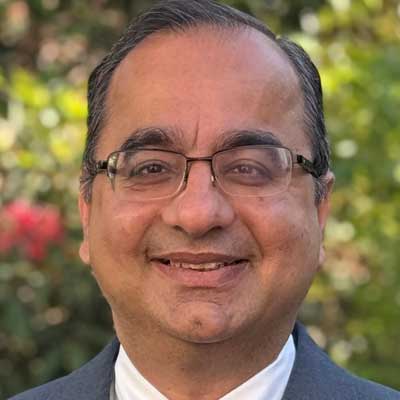
Sanjay Bindra, MD, is a cardiac electrophysiologist and the President, Co-Founder, and Board Chair of GOSUMEC Foundation USA, a zero-staff 501(c)(3) funding medical scholarships in Mumbai. Under his leadership the foundation established the first perpetual endowment in India for medical education — no paid staff, no gift officer, 400 households.
GOSUMEC Foundation USA’s Form 990 filings are available through Philanthropy.org.
Dr. Bindra examines the GIVE Study in “Tools Have Done Their Job. Now We Must Do Ours.”
Edited for Philanthropy.org by Viken Mikaelian