

Generosity Hasn’t Vanished — Confidence Has
Trust, entitlement, and the quiet collapse of voluntary philanthropy For decades, American generosity was a constant. Through recessions, tax rewrites, and political storms, giving stayed
Visionary Voices is Philanthropy.org’s editorial forum for serious ideas, hard-earned lessons, and informed perspectives shaping the future of philanthropy. It is a place for practitioners, leaders, and thinkers to examine what works, what doesn’t, and why.
Contributions explore strategy, governance, donor engagement, ethics, and the structural forces influencing philanthropy today. Articles are grounded in experience, analysis, and reflection—not promotion.
If you’ve developed insight through practice, research, or leadership, we welcome thoughtful submissions that advance credible dialogue and long-term thinking in the field.

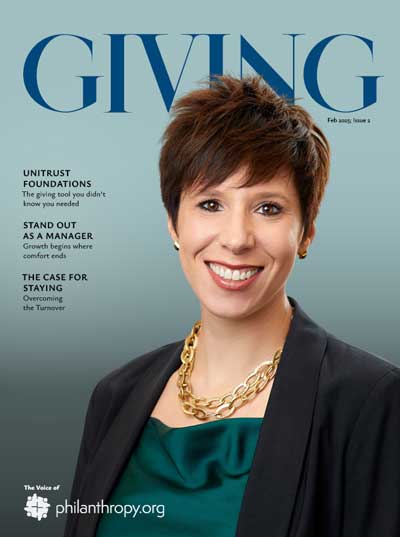
GIVING Magazine
For those who drive change — not watch it. Join the top 1%.
Trust, entitlement, and the quiet collapse of voluntary philanthropy For decades, American generosity was a constant. Through recessions, tax rewrites, and political storms, giving stayed

Philanthropy isn’t dying—it’s consolidating. Americans gave $592B last year, but participating households plummeted from 65% to 45%. The culprit isn’t donor apathy; it’s nonprofit incompetence. Fragmented systems, spreadsheet chaos, and burnout have severed the human connection that sustains giving. Dr. Sanjay Bindra’s GOSUMEC Foundation proves the fix: zero staff, $10K tech stack, 90% recurring donor retention. Stop chasing dopamine hits. Build oxytocin ecosystems. Belonging beats begging.

Nonprofits often build websites that look impressive but feel hollow. In chasing “professional,” they erase their own voice, personality, and lived reality. The result is digital dissonance—a subtle but powerful mismatch between who an organization actually is and how it presents itself online. Visitors feel it instantly. They don’t complain. They just leave, unconvinced and unlikely to return.

Faith-based fundraising offers powerful lessons for the broader philanthropy sector. By anchoring giving in mission, community, and shared values, these campaigns inspire deeper donor commitment. Their focus on storytelling, transparency, leadership participation, and consistent engagement creates a culture of generosity. As Millennials and Gen Z prioritize mission-driven giving, nonprofits that adopt these principles can strengthen donor relationships, increase participation, and build more resilient, purpose-driven communities.

Small nonprofits don’t need staff or scale to achieve big-institution results. The GOSUMEC Foundation USA built a $2M+ endowment with 95% donor retention and zero campaigns by combining identity-centered community design, disciplined governance, and radical transparency. Its ICCO™ model turns donors into co-owners, while the GIVE cycle converts gratitude and voice into recurring support. Governance—not overhead—became the infrastructure, proving trust is the ultimate operating system for small nonprofits.

Nonprofits aren’t “exploring” AI—they’ve already outsourced half their workload to it, mostly without policies, guardrails, or governance. Our latest sector poll shows AI has crossed from experiment to infrastructure while leadership naps. Staff are using it to survive; organizations pretend it’s optional. This is the wake-up call: AI won’t level the field—it will widen it. The competent will soar, and the careless will get exposed.

Philanthropy has mastered urgency — the dopamine-fueled rush of campaigns and instant action — but sustainable giving requires something deeper: relationship. Neuroscience shows that while dopamine sparks generosity, oxytocin sustains it by building trust, belonging, and identity. When nonprofits move beyond transactions and cultivate connection, donors shift from one-time givers to long-term partners — and ultimately to legacy supporters. The future of philanthropy lies not in louder appeals, but in nurturing relationships that endure and compound over time.

Do you know how wealthy donors think? Can you explain the gap between a millionaire and a billionaire? Have you checked LinkedIn before your last donor meeting? Do you track economic indicators shaping giving decisions? Most fundraisers can’t answer these questions—and that ignorance costs millions. Google is free. LinkedIn is free. Zillow is free. Donors don’t owe you their money. Show up prepared or leave empty-handed.

A leadership crisis is hitting the nonprofit sector: veterans are retiring, and few want their jobs. Burnout, dysfunction, and weak succession planning have made top roles undesirable. The solution isn’t another search—it’s a redesign. Leadership must become doable, durable, and desirable: realistic workloads, real support, and roles people actually want. The future belongs to organizations bold enough to rebuild leadership itself.