
The Zero-Staff Blueprint for Sustainable Giving
Urgency Today. Relationship Tomorrow.
Philanthropy has mastered the art of urgency — the dopamine-driven rush of campaigns, countdowns, and emotional appeals that make us click “donate.” But the future of giving depends on something slower, steadier, and far more human: the relationship.
We live in a sector that celebrates acquisition but struggles with endurance. The real question facing philanthropy today isn’t “How do we raise more?” but “How do we make giving last?”
Because giving, at its core, is not transactional. It is biological. It follows the same chemical and emotional rhythm that governs trust, friendship, and love. When we understand that rhythm — from dopamine’s spark to oxytocin’s calm — we begin to see why some gifts last a moment and others last a lifetime.
And the future of nonprofits — especially the 30% (nearly 450,000) that close within a decade — may depend on mastering that rhythm.
The Science of Generosity
Neuroscience has made one truth clear: generosity isn’t just moral — it’s molecular.
Dr. Paul Zak, known as “the father of neuroeconomics,” showed that acts of giving release oxytocin, the “moral molecule” that fosters empathy and connection. Dr. Jorge Moll demonstrated that altruism activates the brain’s reward centers as powerfully as food or love. And Dr. Russell James, studying charitable bequests, found that the more emotionally connected a donor feels, the more enduring their giving becomes.
The early stage of generosity is dominated by dopamine — the neurotransmitter of novelty and anticipation. It’s the emotional spark that powers acquisition: a moving video, a compelling appeal, the instant reward of “doing good.”
But dopamine fades fast. It’s the same mechanism that drives us to chase new experiences, not maintain old ones.
What sustains generosity over time is oxytocin — the molecule of belonging, trust, and shared story. Oxytocin doesn’t spike; it accumulates. It grows with every thank-you, every story, every act of transparency.
In simple terms: dopamine starts generosity; oxytocin sustains it.
The Neurochemical Arc Mirrors the Relationship Arc
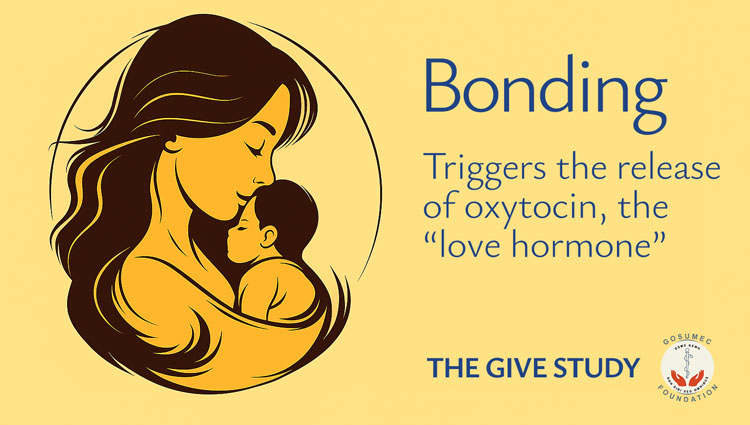
Evolutionarily, oxytocin comes first — it creates the safe, relational base where dopamine-driven curiosity and learning can grow.
In early life, oxytocin shapes bonding, trust, and emotional regulation, ensuring survival and connection.
As the brain matures, dopamine takes over, fueling motivation, exploration, and achievement.
In short, oxytocin builds the bond; dopamine drives the journey.
When plotted over time, the chemistry of giving mirrors the psychology of relationships.
- Dopamine drives attraction — the spark that begins the relationship.
- Oxytocin builds attachment — the trust that makes us stay.
- And ultimately, belonging shapes identity — the moment when giving becomes who we are.
In philanthropy, this translates to:
Dopamine → Excitement → Transaction
Oxytocin → Belonging → Relationship
Identity → Legacy → Continuity
The first donation lights the spark. The second gift begins the bond. The legacy gift seals the relationship in perpetuity.
When organizations design for this full arc — not just the spark — they move from transactional fundraising to transformational relationships.
The Hunter and the Farmer
To understand this shift, imagine two archetypes: the hunter and the farmer.
Hunters live in a dopamine economy. They chase urgency — new leads, new donors, new campaigns. Success is measured by the kill rate: how many clicks, how many conversions. It’s adrenaline-filled and instantly gratifying — but fleeting.
Farmers live in an oxytocin economy. They plant, tend, and nurture. They know that real abundance is not taken; it’s cultivated. They measure success in seasons, not days — in what grows, not what’s caught.
A healthy nonprofit ecosystem needs both hunters and farmers — the spark of dopamine and the steadiness of oxytocin. But most of today’s fundraising models reward only the hunt.
True sustainability comes from thinking like a farmer: building an orchard of relationships that yield fruit year after year, as long as they are tended with care.
Dopamine is the seed. Oxytocin is the soil. Legacy is the harvest.
The Data Behind Belonging
The contrast between hunting and farming is not just metaphorical — it’s measurable.
Across the nonprofit landscape:
- In 2000, roughly two-thirds of American households gave to charity.
- By 2024, less than half did.
The giving rate has fallen from approximately 65% to about 45%, and only one in five first-time donors (20%) ever return.
Today:
- Only about 20% of first-time donors give again.
- Overall donor retention remains around 45%.
- But when donors give more than once — when they cross from dopamine to oxytocin — retention rises to 60% and continues climbing to over 70–75% among true sustainers.
These are not just statistics; they are neurochemical thresholds. The second gift marks the moment a donor moves from excitement to trust.
Every thank-you, every story, every transparent update adds a layer of oxytocin to the relationship — a kind of emotional compounding that strengthens over time.
The GIVE Study: Measuring What the Heart Already Knows
At GOSUMEC Foundation USA, we set out to measure this transition scientifically. Our GIVE Study — the first real-time, prospective study of recurring giving in a zero-staff nonprofit — tracks households over a year to observe how gratitude, impact, voice, and engagement shape donor behavior.
Our framework — GIVE = Gratitude, Impact, Voice, Engagement — translates the science into practice:
- Gratitude triggers oxytocin and anchors emotion.
- Impact satisfies dopamine’s craving for tangible reward.
- Voice converts donors into co-authors of the mission.
- Engagement builds a sense of shared identity.
Early data shows that when donors feel emotionally mirrored in the mission, they stay longer, give more consistently, and organically evolve into legacy donors. The chemistry of trust becomes the architecture of sustainability.
The Bridge Between Today and Tomorrow
Too often, philanthropy ends at the checkout counter — the point where dopamine peaks and then vanishes.
But what if that checkout became a bridge, not a boundary?
The bridge is where the “why” of the donor — their personal story, gratitude, and values — fuses with the purpose of the organization. When that alignment occurs, giving stops being a transaction and becomes a relationship.
The donor no longer gives to the organization; they give through it.
That fusion is the true power of oxytocin: the conversion of generosity from an act into an identity.
Legacy: The Apex of Belonging
Legacy giving is the highest expression of that identity — the oxytocin apex where generosity transcends time.
Dr. Russell James’ research on charitable bequests shows that legacy donors aren’t motivated by tax efficiency or persuasion. They are motivated by continuity — the quiet assurance that their values will live on.
At GOSUMEC Foundation USA, our Legacy Scholarships embody that continuity. Donors begin with curiosity (dopamine), stay for connection (oxytocin), and remain for continuity (identity). They don’t just support students; they build a perpetual community of care.
Legacy giving, in the end, is not about death — it’s about belonging beyond life.
Reimagining Philanthropy’s Operating System
If dopamine built the fundraising playbook of the past — urgency, scarcity, emotional triggers — then oxytocin must build the playbook of the future — trust, gratitude, and belonging.
The new operating system for philanthropy must move from:
- Conversion → Connection
- Campaigns → Community
- Donors → Co-owners
This is not idealism; it’s survival. Without belonging, the sector’s attrition continues. With it, we create the conditions for growth that compounds — the orchard model of philanthropy.
In the orchard, the harvest is slower but perpetual. It requires tending, patience, and seasons of rest. But once mature, it provides fruit not just for today but for generations.
The Future: From Transaction to Transformation
The future of philanthropy will not be won by those who shout the loudest, but by those who listen the longest.
The nonprofits that thrive won’t chase transactions — they’ll cultivate transformation.
They will bridge the donor’s “why” with the mission’s purpose — converting dopamine’s spark into oxytocin’s bond, and ultimately into legacy’s permanence.
We live in a 45% world today — where fewer than half of households give — but we can become a 65% world again if we choose to plant instead of hunt.
Slower, yes. But sustainable — like an orchard instead of a bonfire.
- Dopamine wins the day.
- Oxytocin wins the decade.
- Legacy wins the century.
That is the chemistry — and the calling — of sustainable generosity.
That is Neuro-Philanthropy: the science of giving that begins in the brain, matures in the heart, and endures through community.
Visit gosumec.org/givestudy to learn more about The GIVE Study, a year-long exploration of recurring and relational giving.
Final results will be released in partnership with Givebutter in Q1 2026.



Very nice write-up. I appreciate the analogy of ‘dopamine to oxytocin’. The GIVE study endorses the template for success in a low cost (or zero cost) non profit organization.
Thank you so much, Kishore.
The dopamine-to-oxytocin arc really does capture the shift from short-term giving to long-term trust, and that’s exactly what the GIVE Study is testing in real time, as well as our GOSUMEC experience with the Legacy and Mini Legacy Scholarships.
Appreciate your thoughtful engagement as always.
I loved this. The way you describe generosity becoming identity speaks directly to our mission and the GIVE framework. Thank you for expressing it with such clarity and heart.
Thank you, Archana!
The idea of generosity becoming identity is really the heart of the GIVE framework, and you’ve lived that long before I ever tried to put words to it.
Everything we’re building rests on that simple truth: when giving reflects who we are, it becomes joyful, sustaining, and deeply human.
Grateful for your constant clarity, heart, and example.
Thanks for this unique and compelling argument, Sanjay!
Thank you, Hannah, I really appreciate that, and I’m glad the argument landed clearly!
very well written!
Thank you, Alyssa. I’m so glad it resonated with you!
Great job!
Perfect amalgamation of science and emotion of giving!
Thank you!
That blend is exactly what I hoped to convey. When science affirms the emotion behind giving, it strengthens the entire foundation of how we build trust and community.
Very interesting neurochemical association. Great article. Hopefully understanding this motivates more readers to become sustained oxytocin over-producers
Thank you, Steve, here’s to more people choosing the oxytocin path: slower, steadier, trust-filled giving that actually lasts.
The line “philanthropy has mastered the art of urgency” hits with the weight of someone who’s seen the burnout on both sides… That fatigue is real for both fundraisers and donors, and framing the solution as a shift from a chemical spark to a chemical bond feels just like a release of that pressure!! A permission to build more slowly, and more humanly! LOVED the clarity with which you’ve distilled complex neuroscience into a actionable philanthropic framework is exceptional… The “Hunter vs Farmer” analogy is going to stick with me, and likely many others for a very long time!
Thank you, Sam. Your reflection captures exactly why this matters.
When we move from adrenaline-driven urgency to oxytocin-driven connection, the whole ecosystem breathes again.
And yes, the Hunter vs. Farmer shift isn’t just a strategy — it’s a more humane way for all of us to build generosity that lasts.
I really like the comparison made in “The Hunter and the Farmer” I truly believe that when we cultivate with love, we produce an abundance of delicious fruits that speak for themselves and attract more people.
Beautifully said, Lorena, the farmer’s way creates generosity the same way real gardens grow: with patience, care, and love that naturally draws others in.
Abundance is the byproduct of how we tend, not how loudly we harvest.
Great article! Let’s increase our oxytocin and become a legacy!
Love it, Cristina, here’s to more oxytocin, more belonging, and building legacies that outlast all of us!
I love the way the relationship between dopamine and oxytocin is displayed through this article through building long term, trust based relationships as the basis for giving. Building an identity as a nonprofit is an integral part of building a community and genuine connection with those seeking to support. Well done
Thank you, Arnav, you captured the heart of it.
When a nonprofit’s identity becomes a place of belonging, oxytocin does the work that dopamine never can: it turns supporters into a community.
Grateful the article resonated with you.
As a nursing student, what stood out to me in this article was the emphasis on building relationships rather than focusing only on immediate results. In nursing, we see a similar principle: patient care isn’t just about the momentary treatment or medication; it’s about establishing trust, communication, and ongoing relationships with patients and families. The article’s point that dopamine creates initial excitement while oxytocin sustains connection really resonated with me. Just like donors, patients respond better when they feel understood, cared for, and part of a team, not just recipients of a procedure.
Tina, Beautifully put — the parallel between nursing and philanthropy is spot-on. Like patient care, sustainable giving is built on trust, continuity, and the oxytocin of real connection, not the dopamine of one-time transactions.
Sanjay’s framework maps exactly what we’ve seen for decades in planned giving: dopamine may trigger the first act of generosity, but legacy decisions happen long after dopamine fades. By the time donors include a charity in their estate plans, they’re operating from identity — the highest point on the arc Sanjay describes. This piece gives language to what the sector has sensed but never articulated with this clarity. Glad to feature it here on Philanthropy.org.
Thank you, Viken—coming from you, that validation means a lot.
Planned giving has always lived at the identity end of the arc; I’m grateful Philanthropy.org is giving this language a home, and I’d love to build a short series translating neuro-philanthropy into concrete legacy-giving practices for your readers.
This brilliant exploration of neuro-philanthropy provides the scientific foundation for what I’ve witnessed throughout my 40-year career and articulated in “Beyond the Ask” transformational relationships aren’t just morally superior to transactional fundraising—they’re biologically sustainable. The dopamine-to-oxytocin framework perfectly captures why our sector’s obsession with “the ask” creates short-term wins but long-term attrition, while the farmer’s approach of cultivating belonging builds generosity that compounds across generations. The GIVE Study’s focus on gratitude, impact, voice, and engagement offers nonprofits a practical roadmap for moving from conversion metrics to connection depth—exactly the shift our sector desperately needs. This article isn’t just theory; it’s a call to reimagine philanthropy’s operating system around the chemistry of trust, and I believe it will reshape how thoughtful organizations approach donor relationships in the decades ahead.
Mark, your words mean a great deal — especially coming from someone who has championed transformational fundraising long before neuroscience caught up.
If “Beyond the Ask” named the shift, neuro-philanthropy simply explains why it works: belonging is biologically durable, urgency is not.
I’m grateful that the GIVE Study resonates with your lifelong work, and I hope together we can help move the sector toward the trust-based operating system donors and fundraisers have needed for decades.
This is an insightful article, written from a psychological frame, which explores the motivations and process which an individual undergoes in choosing to be generous.
It is a useful guide for anyone in the nonprofit world where fundraising is an important activity, and guiding a potential donor through the process is a valuable skill.
Thank you, Sarosh, I truly appreciate your thoughtful reflection.
My hope was exactly that: to illuminate the psychological journey behind generosity so we can approach philanthropic support with more empathy, intentionality, and respect.
When we understand why people give, emotionally, cognitively, and relationally, we can guide them in ways that honor their identity and deepen the meaning of their generosity.
Grateful for your kind words and for the work you do in this space.
Excellent compilation – crisp, insightful, and very pertinent for everyone in the philanthropy space!
What truly stands out is watching you quietly put these very principles into action every single day. From dopamine-driven joy to oxytocin-led trust, it’s all visible in the way you lead with genuine care. Thank you for walking the talk! 🙏
Thank you so much, Ram. That means a great deal coming from you. I’ve always believed that the real test of these principles is not in writing about them but in living them; quietly, consistently, and with sincerity.
If anything, the oxytocin-driven trust you mention is something we’re building together, through the work, the discipline, and the compassion we bring to this space every day.
Grateful for your partnership and your steady wisdom. 🙏
Your article captures exactly why donors give today—emotionally, biologically, and through a sense of identity. This is especially true for legacy donors. What you describe is precisely what we see in the real world.
Thank you so much, Lila, that means a lot.
I’ve found the same: when giving aligns with identity and a sense of belonging, it becomes durable, joyful, and deeply human.
Legacy donors especially aren’t responding to an appeal; they’re responding to who they believe themselves to be.
I’m grateful the article resonated with your real-world experience as well.
Fantastic article that highlights and beautifully explains two different philanthropic philosophies. More power to “oxytocin philanthropy”
Thank you! What excites me is that “oxytocin philanthropy” isn’t just a feeling, it’s a design choice.
When nonprofits create trust, connection, and agency, giving becomes sustained and joyful. More power to that future. 🙏
A very compelling story telling about sustainable giving.Sanjay you are a master communicator.You will scale many heights in your venture.Good luck and keep it going.
Thank you, that means a lot. I’m just trying to share what we’re discovering about how trust, identity, and community shape sustainable giving. Your encouragement truly fuels the work. 🙏
You have put forth your mind and your knowledge very beautifully in this article. In comparing the human emotions you have applied your medical knowledge so well that it becomes easier for a giver to understand how he/she is working for the betterment of the society when she/he donates through a nonprofit . The use of a medical perspective is a unique feature of your article. This angle itself should be very much appreciated by the organization that publishes your article. I wish you all a great success in achieving the goal.
Thank you for your generous message. I’ve always felt that medicine and philanthropy share the same foundation, relieving suffering and strengthening human connection.
If the article made that link clearer for readers, I’m grateful. 🙏
Very interesting article!
I did not know that philanthropic behavior develops from a desire to “give”.
Satisfaction from giving leads to more and more until it becomes a habit.
Such a Neuro psychological connection makes sense!
This fascinates me”
What sustains generosity over time is oxytocin — the molecule of belonging, trust, and shared story. Oxytocin doesn’t spike; it accumulates. It grows with every thank-you, every story, every act of transparency.
Thank you so much, Dr. Juthani. Your reflections capture the journey beautifully, how a simple desire to “give” can, over time, evolve into a sustained, identity-shaping habit.
I’m truly grateful for your thoughtful engagement with the piece.
Coming from someone who has contributed so much to behavioral health and trained so many in the field of psychiatry, your words carry special meaning.
This article on Neuro-Philanthropy is truly a “Visionary Voice”. Started in 2023, Dr. Bindra’s GOSUMEC Foundation has raised over $ 2 million by 2025, with zero staff and zero overhead. The primary goal has been to help students from underserved, socioeconomically disadvantaged backgrounds gain admission to GS Medical College, a world-class medical institution. The incredible effort was based on the GIVE Framework (Gratitude → Impact → Voice → Engagement). This is an amazing example of cultivating a profound sense of community among GOSUMEC alumni — a group that, until recently, was largely scattered and disconnected across the US. In just a couple of years, this nascent network was transformed into a vibrant, mission-driven collective united by a common goal. The work of GOSUMEC Foundation USA goes far beyond philanthropy — it is transformational. It builds positive global connections, inspires strong and meaningful purpose, and magnifies individual and societal well-being.
https://SocialDeterminantsOfHealthNetwork.org
Thank you so much, Dr. Jeste. Your words mean more than I can express. Coming from someone who has led the American Psychiatric Association, shaped the global understanding of wisdom, and championed the social determinants of health, your reflection is truly an honor.
I’m grateful that the GIVE Framework and the work of GOSUMEC Foundation USA resonate with you. What began as a small effort to support students from underserved backgrounds has grown only because our alumni rediscovered a shared identity and purpose, something your own research has long emphasized.
Your encouragement strengthens our commitment to building a community rooted in gratitude, belonging, and collective well-being. Thank you for your guidance, your example, and your generosity of spirit.
Dr. Sanjay Bindra, your article on neuro-philanthropy is a masterful blend of cutting-edge neuroscience and practical philanthropy, shedding light on how nonprofits can evolve from dopamine-driven “hunter” tactics—those urgent, excitement-fueled campaigns that snag initial donors but often lead to high churn (with only 20% of first-timers returning)—to oxytocin-infused “farmer” strategies that cultivate deep, trust-based relationships for long-term sustainability. The hunter-farmer analogy is particularly insightful, offering a fresh roadmap for building lasting impact.
This piece has truly inspired me to reexamine how we foster empathy and continuity in giving, reminding us that in a world where household philanthropy has dipped below 45%, the key to revival lies in biology as much as benevolence. Thank you for this profound, forward-thinking contribution—it’s a game-changer for the sector!
Thank you, Dr. Shishir Dhruva, for your thoughtful reflection on the Neuro-Philanthropy architecture.
In 2025, GOSUMEC Foundation USA launched The GIVE Study, a fully relational, behavior-driven approach to generosity. Its insights will be relevant to the 92% of nonprofits that operate small but create outsized impact (small and mighty).
We call our model ICCO-the Identity-Centered Community Organization:
a zero-staff, behavioral, sustainable giving architecture designed for sustainable giving.
ICCO is a framework we developed to help small nonprofits cultivate identity, belonging, and long-term generosity, without campaigns, pressure, or overhead.
This article is remarkable .it has shown philanthropy and our human body relations ,. How dopamine sparks and our mind starts with emotion and then slowly Oxytocin takes place which builds relationships and attachment which leads to continuity . Being a physician I loved this concept and I am grateful to be part of this platform