
An Interview With the Board of the Lynnewood Hall Preservation Foundation
The Lynnewood Hall Preservation Foundation is restoring a 110-room Gilded Age estate outside Philadelphia — and building a legacy giving program and endowment to carry the work past the people who started it.
The story of how they got here appears in GIVING magazine. What follows is the board in their own words: nine people on stewardship, permanence, and why the restoration itself is the classroom.
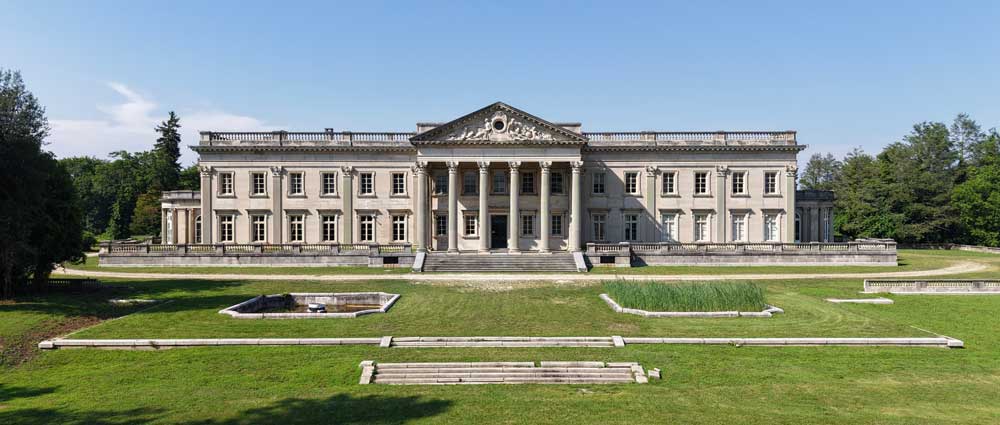
Board Chair; Widener family descendant
Peter R. Widener
What does it mean to you personally to serve as chair of the organization now responsible for Lynnewood Hall?
Serving as Board Chair means a tremendous amount to me. It is a significant responsibility, and I approach it differently because of my family connection to the estate.
With a project of this scale, people are investing not only in the project but in the people leading it. Lynnewood Hall has those people. There have been many moments when others might have walked away, but this team remained committed.
Personally, I want to see the founders’ vision become reality: restoring Lynnewood Hall while repurposing it as an incubator for education and public benefit. I believe the right people are involved, and I do not think Ed and Angie are going anywhere anytime soon.
What convinced you that this organization was worthy of your trust and active involvement?
The people—one hundred percent. Edward, Angie, Tyler, and the volunteers convinced me. [Edward Thome, Angie Van Scyoc, and Site Facilities Manager Tyler Schumacher have been the Foundation’s only three staff members since 2023.] I like the vision and the business model, but ultimately ideas alone are not enough. The people behind them earn your trust.
Why is the nonprofit model important for the estate’s future?
If Lynnewood Hall were treated strictly as a for-profit real-estate opportunity, the incentive could be to demolish the estate and redevelop an extraordinarily valuable property. The nonprofit model keeps the focus on stewardship and public benefit rather than private profit.
Why does planned giving make sense at this stage of the Foundation’s growth?
Planned giving is integral. This is still a grassroots board and foundation with an enormous number of projects ahead. The organization is legally and professionally established, but it needs every possible form of fundraising support to build long-term success.
What do you hope Lynnewood Hall becomes for future generations?
An incubator for education—whether culinary arts, architecture, finish work, carpentry, preservation, or other disciplines. The building itself can be used as a work in progress for teaching. Education should be the overarching goal.
What is one thing you want readers to understand about the Foundation and its leadership?
The Foundation is genuinely in good hands. The leaders took on an enormous project early in their careers, and I do not think better people could have been chosen. They will make small mistakes and learn from them, but they genuinely care.
This is not a stepping-stone for them. They have landed, and they want to see the project through for as long as they are able.
I hope more people visit and are not intimidated by the project’s scale. Whether they contribute philanthropy, time, or expertise, every contribution matters. The only way to eat an elephant is one bite at a time.
The Foundation has spent years putting the framework in place. The plans and groundwork are ready; now the project must execute. Lynnewood Hall can become a free source of education across many areas of life—something too valuable to lose.
Board Member & Principal Preservation Consultant
Dr. Stephen Hartley
When did you first become involved with Lynnewood Hall, and what did you see in the project at that time?
I first became involved through a mutual friend of Edward Thome and me. We toured the property with the previous owner’s realtor while the owner was hesitant to sell. Beginning around 2019, I worked with Edward and Angie through several unsuccessful acquisition attempts. The Foundation ultimately saved the property in 2023, and I joined the board in 2025.
Why is Lynnewood Hall architecturally and culturally significant?
Its significance begins with its sheer size and complexity; when built, it operated almost as a self-contained town. It is also important because Horace Trumbauer—one of America’s most influential Neoclassical architects—designed it as his first major commission while still in his twenties.
Culturally, the family frequently opened the art galleries to the public, and the collection later formed a basis of the National Gallery of Art. Without the Wideners’ appreciation for art and willingness to share it, American collecting and public exhibition could have developed very differently.
What has impressed you about Edward Thome and Angie Van Scyoc as leaders?
Their patience. This has been a long road with major setbacks, and there will be more challenges ahead. Their dedication is inspiring. Edward’s lifelong dream and his ability to excite others about the vision are exactly what a project of this magnitude needs.
Why is a long planning horizon appropriate for a property of this scale?
The estate cannot be tackled all at once, even with unlimited capital. Planning five, ten, and twenty years ahead allows seasonal work to be sequenced and hidden systems—roofing, mechanical, electrical, and plumbing—to be addressed before visually dramatic work begins. Proper phasing prevents the same work from being performed repeatedly.
Twenty years from now, I hope people will say Lynnewood Hall has made a positive contribution to the civic life of the Philadelphia region and helped spur the preservation of buildings throughout the country through the workforce it trained.
Board Member
Gabe Rizzo
What first convinced you to become involved with Lynnewood Hall?
The potential and the scale. I am impact-driven and interested in education. After speaking with Angie and Edward and learning what Lynnewood Hall could become, the history and possibilities drew me in. It felt like a place where meaningful things could happen.
What responsibility comes with serving on this board?
It means wearing multiple hats—helping strategically in some areas and operationally in others, especially with artificial intelligence. The organization is still in a startup phase, so board members must remain dynamic and contribute wherever they can add the most value.
How does the long-term vision influence decisions being made today?
Every decision is being made with long-term strategy, sustainability, and meaningful impact in mind, even when the Foundation does not yet know every eventual use of Lynnewood Hall.
Why does planned giving matter at this early stage?
As a small organization building for the long term, the Foundation needs investment. At this stage, every gift can go a long way toward helping the organization grow and create lasting impact.
What risks would the Foundation face if it focused only on immediate restoration needs?
If the Foundation focused only on the physical restoration, there would be no guarantee that the organization could sustain the site over time. Restoration is essential, but so is building a durable institution capable of caring for the property for generations.
What does permanence mean for this project?
Permanence has multiple layers. The first is preserving and rehabilitating the physical estate. The second is the lasting impact the place can have on visitors. My own experience of Lynnewood Hall—its details, history, and what I learned from Edward—will stay with me permanently, and I hope others have that same experience.
What is one thing you wish more people understood about Lynnewood Hall?
I am surprised by how many people—even in Elkins Park—do not know the building exists. I hope they learn its history and, for those already familiar with the estate, understand that the Foundation is mission-driven and that the site offers many possibilities for physical, social, and educational impact.
Donor & Advocate
Peter Cooke
How did you first learn about Lynnewood Hall?
I first learned about Lynnewood Hall through Instagram. I have long been interested in historic preservation, historic homes, and Horace Trumbauer’s work. When I learned the estate was going to be preserved, I wanted to know more. The Foundation welcomed me, explained its vision, and helped me find ways to become involved.
What made you decide to support the project?
The leadership. Edward, Angie, Tyler, and the board have a strong message and clear goals for preserving the house and bringing it back to life. I am confident this group can accomplish such a large goal.
What gave you confidence in the Foundation and its leadership?
A major moment was seeing the Foundation facilitate the donation of a Widener-related painting and convene an event at the Explorers Club in New York. More than anything, Edward and Angie have shown deep expertise in the house, the family, and what Lynnewood Hall represents for America. I believe they can get this done, and the estate deserves global recognition again.
Was your interest architectural, historical, educational, community-based, personal, or a combination?
It is a combination. The art once housed at Lynnewood Hall helped form the National Gallery of Art, and the Widener family offers an early American example of transformational philanthropy.
Preserving Lynnewood Hall also preserves architecture, gardens, decorative arts, and traditional building trades. The restoration can help train a new generation of craftspeople who will apply those skills to buildings across the country and around the world.
What do you hope your gift and donor advocacy make possible?
I hope the house and gardens can be restored and the stories of the Widener family shared. This is not only about preserving history; it is also about creating the future through architecture, landscape design, art, philanthropy, and American culture.
I also hope the connection between Lynnewood Hall, the Widener collection, and the National Gallery can become better understood.
What do you hope Lynnewood Hall ultimately becomes?
I hope it becomes much more than a traditional museum. It should be a living institution where people actively participate in gardens, restoration, education, and preservation. Visitors should be able to learn, contribute, and become part of the story.
Why should other donors consider supporting this project?
Lynnewood Hall brings together architecture, classical design, horticulture, culinary traditions, decorative arts, and education. The opportunity is not merely to observe these disciplines but to participate in them. The project is much bigger than restoring a house.
What is one thing you want people to understand about the scale and importance of this effort?
Lynnewood Hall tells the story of Peter A. B. Widener and an early example of transformational American philanthropy. It offers opportunities to understand the family, the staff, the architecture, the gardens, national art, and transportation history. There is no other house quite like it remaining in America.
This is a very exciting project. What Edward, Angie, Tyler, the board, and everyone involved are building has the potential to transform Philadelphia and influence the country through art, architecture, horticulture, culinary traditions, and education.
I hope in twenty years people will say Lynnewood Hall is one of America’s great museums and cultural centers—a place welcoming people of every background to participate in classical art, architecture, horticulture, and education; a living institution, not simply a museum.

Founding Board Member
Peter Oyloe
How did you first become connected with Edward Thome, Angie Van Scyoc, and the effort to save Lynnewood Hall?
After researching the property, I contacted the Lynnewood Hall Instagram account to ask whether preservation advocacy was underway. I explained my interests in preservation, nonprofits, and how nonprofit structures can support large capital projects.
Edward Thome responded, and our first conversation lasted about five hours. We discovered strong shared interests in preservation, art, and education. Edward then introduced me to Angie, and the three of us quickly developed a strong working relationship around the possibilities of Lynnewood Hall.
What did you see in Lynnewood Hall that convinced you the original group should organize around a long-term preservation mission?
Other efforts had approached the estate through private or primarily economic models. A property of this scale no longer makes practical sense as a private residence, but through a nonprofit it becomes an extraordinary platform for traditional trades, education, preservation advocacy, recreation, community engagement, and the arts.
Lynnewood Hall was built with the highest level of integrity and quality; the preservation effort should be guided by those same standards.
Why did you encourage the founders to establish a nonprofit rather than pursue private ownership or a for-profit model?
For-profit projects live and die with their owners and are naturally pressured by private agendas. A nonprofit exists to serve a mission involving public benefit, community engagement, and outreach.
Lynnewood Hall offers many “points of access.” Whatever a person’s area of interest or expertise, there is a place within the Foundation’s umbrella. A property of this scope is better served by a broad community mission than by the need to generate returns for a small group of investors.
What protections and opportunities does nonprofit ownership provide?
It means there is not a single private owner. The organization owns the property on behalf of the mission. Employees, volunteers, donors, educators, and preservation professionals contribute their energy, expertise, and passion, creating a larger table of stakeholders and a larger community of beneficiaries.
Why did Wentworth Woodhouse stand out as a model?
Wentworth Woodhouse is a comparable property in scale, acreage, architectural significance, public purpose, and the long runway required for restoration. It was ultimately placed with an entity formed specifically to preserve the estate and return it to community use.
Because the project was several years ahead, it provided both inspiration and a practical reference for what could be possible. Both places have significance extending well beyond their regions.
How did Wentworth Woodhouse influence the early mission and vision?
It demonstrated that a project of this magnitude needs multiple sources of funding and that the building itself must become part of the economic engine. Public programming, educational opportunities, and carefully managed private events can generate support while advancing the mission.
Historically, great country houses were economic centers for their regions. Wentworth Woodhouse showed how that function could be adapted so preservation, public engagement, and financial sustainability reinforce one another.
Why should restoration itself become an educational opportunity?
Restoring Lynnewood Hall will take many years, and it would be a major missed opportunity to conduct the work behind closed doors. The project requires many specialized trades, and nearly every trade organization reports difficulty finding the next generation of workers.
Preservation trades are noble and essential work. Lynnewood Hall can educate, enlighten, and empower people through the work itself. The process should not exist in a vacuum.
What educational programs, training, or partnerships do you hope will grow from the restoration?
The possibilities include building trades, decorative arts conservation, fine arts preservation, building systems, architecture, horticulture, arboriculture, ecology, and land conservation. Because of the scale of the buildings and grounds, educational opportunities from many fields culminate in a single project. The limit is our imagination.
How has the Foundation evolved differently from what you imagined in 2019?
The Foundation has remained lean while continuing to build employment capacity. The most surprising development has been the worldwide network of stakeholders, advisors, and supporters brought to the table, greatly expanding the project’s influence and opportunities.
Why do planned giving and endowment support fit the founding vision?
Planned giving creates a runway for Lynnewood Hall to exist beyond any one person’s influence. It enables people to become involved now and into the future in large and meaningful ways and supports a mission intended to outlive its founders.
What do you hope your own founding role will mean to future generations?
I hope people see it as proof that a small group can create a very big idea. Through passion, continued engagement, collaboration, and hard work, people can build something larger than themselves with meaningful impact in the world.
What do you want readers to understand about Edward, Angie, and the early group?
I want readers to understand the quality of character, the meaningful connections, and the integrity of the group. Lynnewood Hall has remained the focus; this has never been about any one person. The passion and energy have been extraordinary, and the work has been carried out honestly and thoughtfully.
Lynnewood Hall has been remarkable since its creation. It was founded as a place to celebrate family and the arts. By honoring those principles, it can continue to inspire families and demonstrate how the arts remain central to cultural experience for generations. I hope someday people will say Lynnewood Hall is one of the most remarkable places to visit in the United States—a place people return to because each visit offers something new to discover, learn, and be inspired by; a place whose preservation enriches people’s lives for countless generations.

Board Member
Craig A. Sopin
What first convinced you to become involved with Lynnewood Hall?
I love the Gilded Age, the Edwardian era, architecture, history, science, and art. Lynnewood Hall brings all of those interests together. It is also in my neighborhood and has a strong Titanic connection, making the project both professionally and personally meaningful.
What responsibility comes with serving on this board?
I believe I have a responsibility to preserve the history of Lynnewood Hall—not only the architecture, but the era, the people, the collections, and the emotional stories connected to the estate.
As a Titanic historian and collector, I also want to help interpret the Widener family’s Titanic connection. Original artifacts create a different emotional experience than photographs or books. The same is true of Lynnewood Hall: nothing replaces standing inside the place itself.
How does the long-term vision influence decisions being made today?
When I first saw the 110-room estate, I doubted whether restoration was possible. Only a few years later, the transformation is remarkable. It happened through vision, energy, and funding. The passion will remain, but continued financial support is essential to make the long-term goal real.
What risks would the Foundation face if it focused only on immediate restoration needs?
Restoring Lynnewood Hall is a long-term activity. The Foundation must think years ahead and maintain sustained funding. The progress already visible shows what can happen over time, but focusing only on today would make the larger vision difficult to achieve.
What does permanence mean for this project?
Permanence does not mean reaching a point where nothing more needs to be done. Historic places always require care and maintenance. The need for support will never completely end; restoration is one chapter in a much longer story of stewardship.
What do you hope your board service accomplishes?
I hope my service helps bring the vision to completion—through funding, exhibit ideas, interpretation, or encouraging others to become involved. Everything points toward restoring Lynnewood Hall’s beauty and making its history available to the public.
What is one thing you wish more people understood about Lynnewood Hall?
I want more people to understand the estate’s Titanic connection and the stories of the people associated with both the house and the ship. I also wish more people could experience the depth of what I have learned during long tours with Edward. Every visit reveals new stories and details.
The more people who visit and understand the estate, the more people will become involved financially and in other ways. Public access now exists in a way it did not before. I hope people travel from near and far to experience something that can only be seen in Elkins Park, Pennsylvania.

These drawings, found under a broken mirror, are believed to date back to Lynnewood Hall’s construction — if you look closely and follow the lines from the moustache, you can see “1899” to the left of the central figure. Photo by Patrick F. O’Donnell.
Board Member
Kristina Wilson
What first convinced you to become involved with Lynnewood Hall?
My connection began more than ten years ago as an armchair urban explorer fascinated by photographs of Lynnewood Hall. I was amazed that such a vast European-style mansion still existed and had escaped demolition.
After becoming Archivist at the Athenaeum in 2024, I was introduced to Edward Thome and began advising Edward and Angie on archives, preservation standards, and collections care. We collaborated on an exhibition at the Athenaeum, and about a year ago I was thrilled to join the board.
What responsibility comes with serving on this board?
I contribute to strategic planning, mission focus, and institutional development. Professionally, I also want to help Lynnewood Hall create a robust, accessible, and meaningful archive with appropriate preservation standards and a dedicated archival space.
How does the long-term vision influence decisions being made today?
The project can feel daunting if viewed as a single massive undertaking. The Foundation’s approach—working in small, prioritized phases—is crucial. The strategic plan and structural reports provide a roadmap for stabilizing both the building and the organization so that each can succeed.
What risks would the Foundation face if it focused only on immediate restoration needs?
Stabilizing the building is essential, but focusing only on the structure is too short-sighted. Lynnewood Hall also includes the grounds, collections, programming, community relationships, and institutional development. Programming and engagement may be as important as beautifying the building because they create the conditions for long-term success.
What does permanence mean for this project?
Permanence means preserving the physical hall, but also ensuring that it serves the larger community. A building should not exist in a vacuum.
As an archivist, I can preserve collections safely, but if no one sees, accesses, or uses them, they do not fulfill their purpose. Lynnewood Hall is the same: preservation must be paired with interaction and access.
What do you hope your board service accomplishes?
I would love to see a functional, usable, accessible archive and a dedicated archival space where people can explore the estate, the Widener family, and the wider early twentieth-century context. Without historical context, it is simply a building; preserving the surrounding histories is crucial.
What is one thing you wish more people understood about Lynnewood Hall?
People may dismiss it as merely the house of a wealthy family or as something elitist and grand. That surface reading misses the broader story: architecture, craftsmanship, the architect, social history, cultural history, and the many lives connected to the estate.
I hope people look deeper and understand that Lynnewood Hall is about far more than the people who lived inside it. Twenty years from now, I hope people will say Lynnewood is a vibrant community center that effortlessly connects Gilded Age history with modern sensibilities, community ties, and growth—a living, active place rather than a shell or static museum.

Board Member
Jeff Buerger
What first convinced you to become involved with Lynnewood Hall?
Peter Rutledge Widener approached me about a board position. Once he explained the project’s goals, I was immediately engaged. I hope even a minor contribution can have lasting effects for future generations, especially inner-city youth.
What matters is not only restoring the buildings, but using them for education—possibly culinary or etiquette programs—and giving the public access to something once enjoyed by a privileged few. Ultimately, the goal is to help other people.
What responsibility comes with serving on this board?
My responsibilities include seeking donors who share the vision, raising capital, spreading awareness, and helping create an environment that benefits local youth and expands educational opportunities.
How does the long-term vision influence decisions being made today?
We must consider present needs, the historical context, and the future vision at the same time. Decisions should sustain the mission so it can be passed to future board members and supporters who will continue the legacy.
Why does planned giving matter at this early stage?
Planned giving is fundamentally critical. The project depends on people with the means and willingness to share the vision. Donors want to know where their money is going, and the Foundation provides accountability, hands-on connection, recognition, and validation for their efforts.
What risks would the Foundation face if it focused only on immediate restoration needs?
Restoration is essential, but it is only one piece of the larger vision. The building must be restored before it can safely serve the public, yet the financial support is also investing in everything that follows—education, access, and programming. Restoration is the first step on the ladder.
What does permanence mean for this project?
Permanence is multidimensional. It means restoring and maintaining the building for another hundred years, but also using it for education and public benefit. The estate presents many possibilities, including youth programs, community and cultural events, film work, galas, and other creative uses that can support sustainability.
What do you hope your board service accomplishes?
Serving on the board is an absolute privilege and honor. I hope my service is centered on helping young people in Philadelphia and the surrounding region, increasing educational opportunities, and allowing the public to participate in something historically significant. I hope to contribute something meaningful that lasts and am willing to do whatever work is needed.
What is one thing you wish more people understood about Lynnewood Hall?
I wish more people understood the craftsmanship, attention to detail, and character achieved with the limited resources of the period. Lynnewood Hall is like a Rembrandt—a masterpiece and a step back in time.
More importantly, when restored, it should contribute to the enrichment, education, and well-being of young people and the public for generations.

This interior skylight was part of a sophisticated system to illuminate Lynnewood Hall’s rooms and galleries using sunlight. Photo by Patrick F. O’Donnell.
Preservation Architect & Strategic Advisor
Steve Mar-Pohl
How did you first become involved, and what warranted a long-term professional commitment?
Peter Oyloe, a fellow Wisconsinite and preservation advocate, introduced me to the project. The buildings were in relatively good condition considering decades of neglect, but the people ultimately convinced me.
Their passion matched my own commitment to preservation and to educating architects, engineers, and historic tradespeople. Once I understood the depth of their conviction, I knew this was a group to which I could devote substantial time and volunteer effort.
From an architectural and preservation perspective, what makes Lynnewood Hall distinctive, and what are the priorities now?
Lynnewood Hall retains an exceptional amount of historic fabric and offers a rare opportunity to combine preservation, public programming, education, and traditional trades. The immediate priority is triage: identifying areas of greatest need and making the building weather-tight and preservable while its long-term use is planned.
How has your role grown into a broader strategic partnership?
I kept returning, talking with the team, and explaining how much I appreciated the vision until it stopped being what they were planning to do and became what we were planning to do.
How do you bring varied professional stakeholders together?
I have a broad network across architecture, engineering, conservation, the trades, education, nonprofits, and related organizations. Many already believe deeply in preservation and education. Opening the possibility of involvement in Lynnewood Hall is often enough to generate strong interest.
Why is stakeholder coordination especially important?
Without stakeholders, there is no project. They must understand and buy into the mission, vision, and goals. Stakeholders become partners, partners become donors, and donors help make the project possible.
What has impressed you about the Foundation’s educational commitment?
Education at this scale is a labor of love. It will not, by itself, pay for everything that must happen. The dedication is visible in people who work twelve to sixteen hours a day with a smile because they believe in the mission.
How can active restoration become a practical classroom?
I have developed similar work since 2009 in Kenosha, Wisconsin, and later at the Missouri Botanical Garden. Education and training help people understand materials, space, history, and the art of preservation. Hands-on work enables learning that cannot be replicated in a classroom alone.
How has the University of Notre Dame relationship strengthened the project?
Notre Dame’s program is rooted in classical design and preservation. I have hired three of its graduates because of the quality of their education. The faculty I have encountered are second to none, and I found a kindred spirit in Professor Paolo Vitti from our first meeting.
What professional assessments and documents are most important before large-scale restoration?
First, understand exactly what must be done and in what order. Assess building conditions, identify areas of greatest need, and create triage projects that protect the estate while future uses are planned.
Foundational documents include a Historic Structure Report, Cultural Landscape Report, and conditions assessments. Together they establish priorities and the information required for safe, responsible preservation.
How do the HSR, CLR, Strategic Plan, and Master Plan work together?
No major preservation decisions should be made until the Historic Structure Report, including a preservation plan, is complete. The HSR identifies character-defining features, evaluates their integrity, and guides appropriate treatment. At Lynnewood Hall, almost everything is character-defining.
The Cultural Landscape Report performs the same function for the thirty-four acres of grounds. The Strategic Plan defines mission, programs, and support; the Master Plan translates strategy into physical use. All are living documents that are revisited and updated as the project evolves.
What are the greatest challenges beyond fundraising?
The greatest challenge is not losing sight of the mission and vision. Programmatic needs, budget pressures, and compromises will arise. The HSR, CLR, Strategic Plan, and Master Plan keep decisions aligned so necessary compromises do not diminish the larger purpose.
What have you observed about Edward Thome and Angie Van Scyoc as partners?
They show extraordinary focus and dedication. They have given enormous amounts of time, energy, livelihood, and life to embodying what the Foundation is intended to be: a celebration of Lynnewood Hall as a cultural asset, combined with education, cultural enrichment, and public benefit.
Why should donors view planning and education as essential investments?
Donors who share their resources with the public often seek the greatest possible public benefit. Professional planning ensures responsible preservation; educational programming multiplies impact by training future generations. Traditional trades education is particularly important in the age of artificial intelligence. These investments do not simply restore one building; they preserve knowledge, develop skilled professionals, and enrich society.
What do you hope your contribution will make possible?
Preserving a historic building also preserves culture, materials, historic fabric, and the planet. Preservation offers environmental as well as cultural benefits. In generations to come, I hope people will say Lynnewood Hall is a shining example of what preservation can do—an example of what I can do with my life, my building, and my career, and what we can all do better as a society.

Property and Preservation Facts
- Construction began in 1897 and was completed in late 1899.
- Architect: Horace Trumbauer, who was 27 when he designed the house.
- Approximately 110,000 square feet, 110 rooms, and just under 35 acres.
- Listed on the National Register of Historic Places on August 15, 2025.
- More than $15 million raised since the project began, including approximately $9 million for acquisition.
- Current priority: Dry-in the main house through roof, downspout, window, and related envelope work before decorative restoration proceeds.
- Active work includes the Van Dyck Gallery roof and Bellini-Cellini Gallery roof.
- Lynnewood Lodge is expected to be a major next preservation focus.
Fundraising and Planned Giving Facts
What are the current fundraising priorities?
Current priorities include completing strategic planning; entering master planning; continuing stabilization; building readiness for a capital campaign; planning for major infrastructure such as mechanical systems; beginning exterior and grounds work; strengthening development capacity; and building the policies, staffing, and systems needed for long-term sustainability.
What is the status of endowment and planned giving work?
Endowment planning and development of a Legacy Society are in progress. The Foundation is working with Raymond James and PlannedGiving.com while its Finance and Development Working Group develops gift acceptance policies, procedures, governance, and the organizational systems needed to responsibly receive a broader range of gifts. Several supporters have already included Lynnewood Hall in their estate plans.
Advisors
The Foundation is working with Raymond James and PlannedGiving.com on endowment planning and the development of a Legacy Society. Raymond James is represented by Eric G. Werner, First Vice President, Wealth Management and Senior Institutional Consultant.
PlannedGiving.com provides Lynnewood Hall’s planned giving resources pro bono.
About this feature
These interviews accompany “The Rebirth of a Masterpiece” by Patrick F. O’Donnell, published in GIVING magazine.