
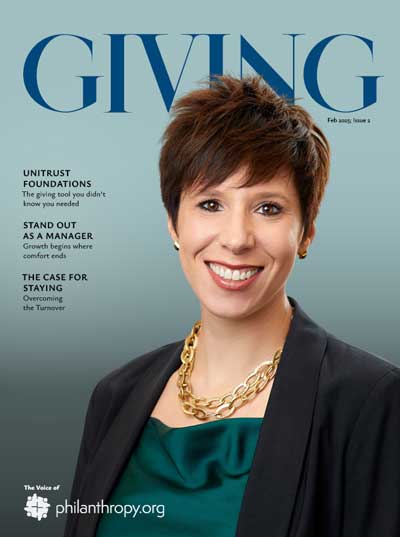

Visionary Voices

Visionary Voices is Philanthropy.org’s editorial forum for serious ideas, hard-earned lessons, and informed perspectives shaping the future of philanthropy. It is a place for practitioners, leaders, and thinkers to examine what works, what doesn’t, and why.

Contributions explore strategy, governance, donor engagement, ethics, and the structural forces influencing philanthropy today. Articles are grounded in experience, analysis, and reflection—not promotion.

If you’ve developed insight through practice, research, or leadership, we welcome thoughtful submissions that advance credible dialogue and long-term thinking in the field.

Browse by Topic
Close-up of a rope tied in a knot, symbolizing strain

The Philanthropy Paradox: A Love Letter to Fundraisers Who Hate Their Donors

American philanthropy is funded by people whose success the nonprofit sector increasingly treats as a moral problem. Fundraisers rely on donors who built businesses, accumulated assets, and believe in choosing where their wealth goes—while supporting policies that would reduce both wealth creation and charitable giving. This essay examines the uncomfortable contradiction at the center of modern fundraising and asks a simple question: why solicit voluntary generosity while endorsing systems designed to weaken it?


Read More »

Strategic Planned Giving: Why Online Will Planners Fail Nonprofits

Digital will platforms are expensive, slow, and aimed at the wrong donors. High-net-worth households use attorneys; faith-based institutions dominate bequests without these tools. The math is brutal: decades of fees to net very little, while boards celebrate gross and skip the P&L. In the rooms that matter, peers are polite—and quietly laughing. If you want six-figure legacies (average $50K–$90K, with 70% realized within five years of death), fund disciplined, relationship-based cultivation, advisor outreach, and a real moves-management program. Stop signaling convenience over competence. Choose effective over easy—and earn legacies this decade, not the next.

Read More »
An image of levers and choosing the Most Overlooked Growth Lever in Nonprofits: Smart Spend.

The Most Overlooked Growth Lever in Nonprofits: Smart Spend

Most nonprofits master saving and managing—but few learn to spend strategically. Boards obsess over penny-pinching while overlooking investments that fuel real growth: talent, systems, and time. “Smart Spend” reframes spending as stewardship—how leaders equip organizations to scale mission impact. When boards evolve from guarding the checkbook to investing in the engine, fundraising becomes predictable, sustainable, and transformative.

Read More »
Empty gift box with red bow, symbolizing empty promises of online will planners

Some Truth About Online Will Planners

Online will tools are tactical widgets, not strategies. They create pledges, not relationships, and leave nonprofits bragging about empty numbers instead of real gifts. Legacy campaigns, by contrast, are a full-time effort—cultivating donors with mail, calls, microsites, and stewardship. Tools alone are shortcuts that stall impact; campaigns build pipelines that deliver results. If you want lasting legacy revenue, stop chasing gadgets and start committing to the discipline of a real program.

Read More »

When Ancient Wisdom Meets Modern Giving

Ancient Indian traditions and modern behavioral science share surprising parallels in how they inspire generosity. At GOSUMEC Foundation USA, we unite these wisdom streams into an East–West Behavioral Philanthropy Framework—blending identity-based giving, stewardship, and transparency with proven donor retention strategies. Our zero-overhead, trust-based model funds perpetual scholarships while achieving donor retention rates far above the nonprofit average, offering a blueprint for sustainable, scalable philanthropy built to last.

Read More »
Woman holding money with a mask trying to convey preventing allergy

Money Allergy

Fundraisers often suffer from a “money allergy.” When terms like “capital gains” or “charitable trusts” arise, the conversation shifts to emotional stories instead. But serious donors don’t think in anecdotes—they think in assets, taxes, and leverage. Until fundraisers speak that language, major gifts remain out of reach. A story without math is fluff. A story with math is a check. Philanthropy’s cure starts with financial fluency.

Read More »
>