Author: Viken Mikaelian

A powerful bull in a business suit signing a document labeled ‘Budget Cuts,’ surrounded by stern-faced executives, symbolizing aggressive financial decisions and austerity measures.

How to Fight Back Government Cuts

When the Classical Theatre of Harlem lost $60,000 in NEA funding, outrage followed. But let’s strip away the emotion and apply business logic: if your organization can’t survive without a government grant, the problem isn’t the funding cut—it’s your model. The arts shouldn’t have to beg. They should thrive. Planned giving isn’t flashy, but it works. It’s time to move from panic to planning—and build financial independence that doesn’t hinge on politics or pity.

Read More »
Elephant precariously perched on a fragile tree branch, symbolizing unsustainable weight, instability, and the looming collapse of fragile systems

7 Pillars That Keep You Standing

Nonprofits rarely collapse from bad intentions. They collapse because the foundation is cracked. Seven pillars determine survival: strategy, packaging, focus, prospects, outreach, stewardship, and leverage. Miss one and you wobble. Miss two or three and you’re irrelevant. Passion won’t save you. Discipline will. Prosperity isn’t luck—it’s alignment. Ignore the pillars, and you’re building a mission on sand.

Read More »
Wall Street Journal Clipping: Many Colleges Fail in Teaching How to Think

Many Colleges Fail in Teaching How to Think — And Donors Are Catching On

In 2017, the Wall Street Journal warned: “Many Colleges Fail in Teaching How to Think.” Eight years later, was it prophecy? Alumni giving is down. Public confidence has collapsed. Colleges are closing almost weekly. Donors now ask: Am I funding thinkers—or just diplomas? Real education, or expensive amenities? If students leave no better at reasoning than when they arrived, why should anyone keep writing checks? The warning was clear. The collapse was inevitable.

Read More »

2025, August

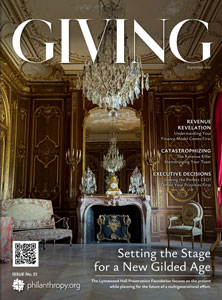
Featured Cover Preview Small and mighty: The GOSUMEC Foundation proves that you don’t need to be a big nonprofit to achieve sizable results Dr. Sanjay

Read More »
Surreal desert landscape shaped like a human eye, symbolizing the illusion behind inflated legacy gift lists and the need for clearer vision

The $117 Million Mirage: Why Most Legacy Gift Lists Are Illusions

A nonprofit celebrated 1,270 bequest commitments worth $117 million. Reality check: filtering for actual prospects yielded 55 names. Calling those 55? They reached five people—none remembered making any commitment. The culprit: organizations spending $8,000-$20,000 annually on digital tools, expecting software to cultivate donor relationships. When results disappoint, staff move on, leaving nonprofits with the cleanup. The lesson: five genuine legacy phone calls will always outperform 1,270 fictional commitments. You can’t build relationships with shiny website objects.

Read More »
Depiction of Harvard University

Would You Donate to Harvard?

Harvard: citadel of brilliance or fortress of privilege? For decades, liberals slammed it as an elitist gatekeeper—legacy admissions, donor perks, and wealth dressed up as meritocracy. Now, conservatives aim to gut its funding, branding it a woke factory. Different flags, same battlefield. Reform or revenge—the motives have shifted, but Harvard remains rich, elite, and untouchable. The question isn’t whether it deserves criticism. It’s whether you’d bankroll an empire of inherited advantage… or gamble on the promise of change.

Read More »
Concerned fundraising professional reading tax reform updates, reflecting nonprofit sector’s uncertainty after the One Big Beautiful Bill Act passed.

New Law, Same Panic

On July 4th, the One Big Beautiful Bill Act (OBBB) became law—prompting predictable panic in the nonprofit sector. Critics decried lower top-tier deductions and a new AGI floor. But pause. OBBB didn’t undercut charitable giving—it strengthened it. By making key reforms permanent, it created clarity: a 60% AGI limit for cash gifts, a new deduction for non-itemizers, and preserved estate exemptions. Just as important, it solidified long-term economic stability—an essential foundation for future generosity. This wasn’t a loss; it was a safeguard. The smart fundraiser sees the opportunity, not the noise. It’s time to stop reacting—and start leading.

Read More »

2025, July

Featured Cover Preview Operation Contagious Philanthropy: Finding That Eureka! Narrative to Engage Navy SEALs Kim Rhinehelder, CFRE, National Director of Development & Capital Campaign,Navy SEAL

Read More »
Illustration of a crouching nonprofit leader under a lightning-cracking storm cloud, symbolizing organizational fragility and looming Black Swan crises.

Built to Break: How Nonprofit Culture Creates Its Own Crises

Many nonprofits operate like unsuspecting turkeys, assuming past stability guarantees future safety. Built on feel-good events, crisis-driven appeals and compliance-focused boards, they remain fragile when unpredictable Black Swans—economic shocks, political upheavals, shifting donor sentiment—strike. Reactivity replaces strategy, visibility trumps resilience, and metrics reward vulnerability over strength. True antifragility requires cultivating long-term donor relationships, endowments, dissent-welcome hiring, mission-anchored vision, and durable structures that absorb disruption and emerge stronger, turning inevitable crises into growth catalysts for mission-driven impact ahead.

Read More »

Tata Trusts

Country: Denmark

This another example of an excerpt. About 50 to 6 words. A word example blurb. Mani words e pluribut mini. A semi homa bobule horation minga boma. This another example of an excerpt. About 50 to 6 words. A word example blurb. Mani words e pluribut mini. A semi homa bobule horation minga boma.

Read More »
>