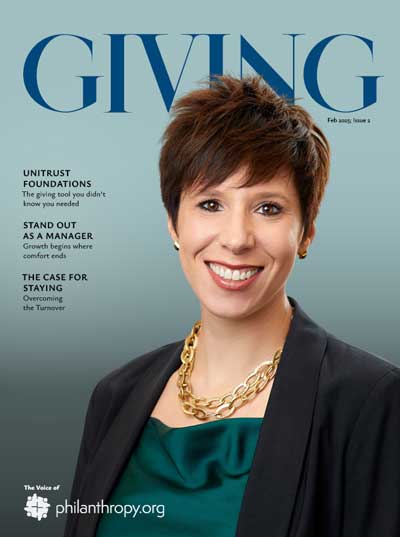

We are grateful to Gail Perry, MBA, CFRE, for graciously granting us permission to reprint this powerful article. Originally shared with her audience at the Gail Perry Group, this piece offers urgent, clear-eyed guidance for nonprofits navigating crisis. It aligns with our mission at Philanthropy.org to elevate bold voices and actionable ideas that help the sector thrive.
Viken Mikaelian
Let’s be honest — this is a bit of a rant. Prepare yourself for some tough love, hard truths, and practical takeaways to keep your organization on the right track during this crisis. Trust me: a small vision won’t cut it.
Nonprofits are operating in a difficult environment. That’s a fact. How many challenges have been thrown our way this year alone? The pandemic. Social injustice. A divisive election. And serious economic pressures for many organizations.
The only way to flourish is to tackle challenges head-on. You and your board must choose to focus on the hard stuff — the difficult decisions, the scary risks. Your nonprofit needs leadership during crisis.
Too many organizations are hunkering down, muddling along in survival mode. Will they make it? We doubt it.
Instead, we want to see you take a strong stand for a new, expanded vision. If you want to flourish in the future, you need a bigger goal — both financially and programmatically. Are you inventing new ways to serve your community? Are you inspiring donors with a bold vision for what’s next?
If your nonprofit wants to thrive in the world to come, here are our dos and don’ts for maximizing the benefits of this challenging time:
1. Do Expand. Don’t Contract.
Believe in yourself and in your organization. This is not the time to doubt your mission, your work, or your team. Don’t cling to a small vision. Nonprofit professionals are a special breed — they fight when the going gets tough, and their passion fuels their energy.
Think outside the box, challenge yourselves, try the impossible. This is the time to expand together, not contract alone.
2. Do Encourage Your Board to Prioritize. Don’t Get Sidetracked by Non-Critical Topics.
We see this every day. The issues looming are so overwhelming that board members retreat to easier, safer conversations. The organization’s future may be at stake — and the board is discussing Zoom formats.
Time with your board is precious. Use it wisely. The elephant in the room is your financial future — name it, face it, tackle it. Leadership during crisis requires the ability to focus.
3. Do Reinvent. Don’t Retreat.
Do you need to revamp your business model? Rethink earned revenue? It’s time to think big and be bold.
Where’s your opportunity and creativity? Your board can’t get away with the same old view of the world. Wake them up with a bold challenge.
Now is the time to build a new vision for the future. Nothing is going back to “normal,” so don’t cling to the plans of past years.
4. Do Invest in Fundraising. Don’t Cut Your Revenue Streams.
If you cut fundraising, here’s what will happen:
- You’ll lose contact with your most loyal supporters.
- That donor newsletter you canceled? It no longer keeps them informed or connected.
- Your thank-you letters are delayed — and donors feel unappreciated.
- Eventually, they stop giving.
This is brutal, but it’s true. If you want to do more good, you need more money. More money requires investing in fundraising, not slashing it.
5. Do Tap Reserve Funds If Absolutely Necessary. Don’t Jeopardize the Future in the Name of Fiscal Conservatism.
“But the reserve fund is for an emergency.” This is the emergency.
This is the rainy day you saved for. If you cut too severely, there may be nothing left — no staff, no donors, no services.
Invest if you need to. Retool if you must. The priority is to stay afloat and keep fundraising to power your work. Major donors are stepping up. But you have to stay in the game to receive.
Bottom Line
There’s too much at stake right now. It’s time to step up. Prioritize. Communicate. Act Boldly.
Want to lead instead of lag behind?
At Philanthropy.org, we elevate voices like Gail Perry’s because bold thinking is no longer optional — it’s survival.
If your organization is ready to move from crisis mode to a future defined by clarity, leadership, and growth, you’re in the right place.
Viken Mikaelian